
Find Lexington County Bench Warrants
Lexington County bench warrants are issued by courts across this large suburban county near Columbia. The Clerk of Court on East Main Street handles circuit court records and bench warrant questions. Lexington County has multiple magistrate courts and municipal courts that issue bench warrants regularly. The county's population and number of courts mean a high volume of bench warrant cases. You can search for bench warrants through the South Carolina Public Index or by contacting the Clerk of Court, the Sheriff's Office, or the Warrant Division directly.
Bench Warrants in Lexington County
A bench warrant is a court order that tells law enforcement to bring a person before a judge. The SC Summary Court Bench Book defines it as a "form of process issued from the bench for attachment or arrest of a person." A bench warrant is not an arrest warrant. An arrest warrant opens a new criminal case. A bench warrant is tied to a case that already exists in the Lexington County court system.
Failure to appear is the main reason for bench warrants in Lexington County. A person gets a court date and does not show. The judge issues the warrant. Failure to pay a fine or court cost is another cause. Sometimes a person is tried in their absence and found guilty. The bench warrant then compels their arrest so the sentence takes effect. Lexington County magistrate courts issue a large number of these warrants each year due to the volume of cases they handle.
Bench warrants in Lexington County do not expire. They stay active until the court recalls them or the person is brought before the judge who issued the warrant.
Search Lexington County Records
The Lexington County Public Index is a free search tool from the South Carolina Judicial Branch. Enter a name or case number to look up cases. Click the Action tab on any result. Entries like "Failure to Comply" or "Archived Bench Warrant" show that a bench warrant was issued in that case. The Public Index covers circuit and summary court cases in Lexington County.
Contact the Lexington County Clerk of Court at 803-785-8212 for current bench warrant information. The office is at 205 E Main St, Lexington, SC 29072. The Lexington County Sheriff's Office is at 521 Gibson Rd. Call 803-785-8230 for general questions. The Fugitive Unit can be reached at 803-785-2499. The Warrant Division is at 803-521-9683. These offices can confirm if a bench warrant is active in Lexington County.
The SLED CATCH system is a statewide background check tool. It costs $25 per search and may return bench warrant data from Lexington County courts.
Lexington County Court System
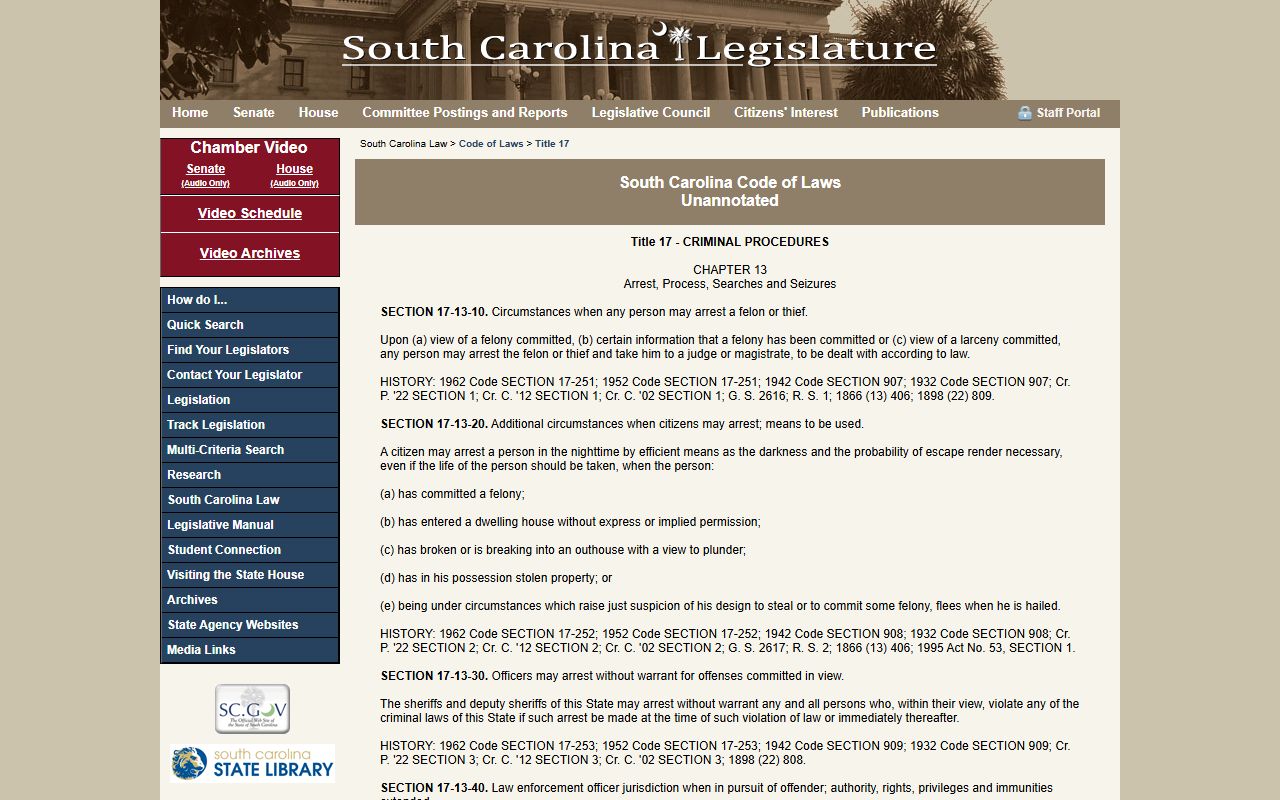
The South Carolina Code of Laws governs the bench warrant process used in Lexington County courts. The full text is available through the Lexington County government website and the SC Legislature.
Lexington County has one of the more active court systems in the state. Bench warrants are common across its magistrate courts, which include Central Traffic, Irmo, Lexington, Swansea, Cayce-West Columbia, Oak Grove, and Batesburg-Leesville courts. Each of these courts can issue bench warrants for cases under their jurisdiction.
| Clerk of Court |
Lexington County Clerk of Court 205 E Main St Lexington, SC 29072 Phone: 803-785-8212 |
|---|---|
| Sheriff |
Lexington County Sheriff's Office 521 Gibson Rd Phone: 803-785-8230 |
| Fugitive Unit | Phone: 803-785-2499 |
| Warrant Division | Phone: 803-521-9683 |
| Website | lexsc.gov |
Magistrate and Municipal Courts
Lexington County has seven magistrate courts spread across the county. These courts handle traffic cases, minor criminal charges, and civil disputes. They issue bench warrants regularly when people miss court dates. The widespread use of bench warrants in Lexington County magistrate courts makes it important to know which court issued a warrant before trying to resolve it.
Under Section 22-5-115, a magistrate may issue a summons before a bench warrant. This gives the person a chance to appear voluntarily. If they do not come, the bench warrant follows. Lexington County magistrates apply this option based on the facts of each case.
The Town of Lexington Municipal Court at 111 Maiden Lane also handles bench warrants. Call 803-359-6260 for questions. Bench warrants from this court must be resolved with payment by cash, money order, or certified check only. No personal checks or credit cards are accepted for bench warrant payments at this court.
Note: When arrested on a bench warrant in Lexington County, a person must appear before a judge within 24 hours for a bond hearing.
Public Records Requests
Under South Carolina's Freedom of Information Act, S.C. Code Section 30-4-10, bench warrant records in Lexington County are public. Anyone can request them. You do not need to be a party to the case. File a FOIA request with the Clerk of Court or the Sheriff's Office.
Offices must respond within 10 business days for records less than 24 months old. Older records get 20 business days. Standard copy fees apply. Lexington County follows the same FOIA rules as every other county in South Carolina.
Bond Violations in Lexington County
Bond violations trigger bench warrants in Lexington County. Under Section 38-53-70, when a defendant breaks bond conditions, the court issues a bench warrant. The surety or bail bond company has 90 days to find the defendant and bring them back. If the surety fails, they risk losing the full bond amount.
Bond conditions may include curfews, travel limits, no-contact orders, or drug testing. Breaking any condition can result in a bench warrant from the Lexington County court. The Sheriff's Office Fugitive Unit at 803-785-2499 handles many of these cases. Under Rule 13, courts are encouraged to reschedule hearings rather than issue bench warrants for bond violations when the facts permit it.
Note: Bond violation bench warrants are treated more seriously than those issued for missed court dates in Lexington County.
Resolving Lexington County Warrants
If you have a bench warrant in Lexington County, take care of it promptly. Call the Clerk of Court at 803-785-8212. Ask about your case and what the court needs. The court may set a new hearing date. You may need to turn yourself in at the Sheriff's Office or pay outstanding fines at the municipal court.
- Call the clerk to check your case status
- Contact an attorney for guidance
- Turn yourself in at the sheriff's office
- Pay fines at the municipal court if required
- Attend the rescheduled court date
An attorney can contact the court on your behalf. They may arrange a surrender date or request a bond hearing. The SC Judicial Branch website lets you look up your case status online before you take any action in Lexington County.
Waiting makes things worse. Ignoring a bench warrant can lead to higher bonds, added charges, or time in jail. Handling it quickly gives you the best possible outcome in Lexington County court.
South Carolina Warrant Laws
Title 17, Chapter 13 of the South Carolina Code covers warrants and arrests. These statutes apply in Lexington County and every other county in the state. A bench warrant cannot start a new case. It applies only to a person with an open matter before the court. If a bench warrant exists for you in Lexington County, it means a court obligation went unmet.
South Carolina has roughly 300 magistrate courts across its 46 counties. Lexington County alone has seven. Each one can issue bench warrants for cases within its area. The SC Summary Court Bench Book guides these judges on when and how to issue bench warrants. All Lexington County courts follow the procedures in this book.
Cities in Lexington County
Lexington County includes the town of Lexington and parts of other municipalities. Each city may have its own municipal court that issues bench warrants. Check the Public Index for the specific court if you are looking for a municipal bench warrant in Lexington County.
Nearby Counties
Lexington County borders several other South Carolina counties. Bench warrants are enforceable statewide. A warrant issued in Lexington County can be served by any law enforcement officer in the state. Use the Public Index for each county to check nearby areas.